

Inside the Cab: 5 Lessons One School District Learned From Their AI Bus Pilot

Every morning in America, more than 25 million students ride to school on a fleet that has no room for error. For Richland School District Two in South Carolina, operating roughly 200 buses across eight complicated routing systems is far more than a scheduling exercise; it’s a daily act of responsibility.
In a year where 128 people lost their lives in school bus–related crashes nationwide, the district decided to look for additional safety insights from a new source. To get deeper visibility, they turned to Safe Fleet’s Duet™AI Driver Behavior Monitoring System––uncovering cultural dynamics, behavioral trends, and hidden issues that had previously gone undetected.
1. Positioning AI as a Coach, not a Cop
Drivers weren’t thrilled when inward-facing cameras arrived. Many assumed it was “Big Brother” in the windshield—one more reason to feel scrutinized in an already high-stress job.
However, the narrative shifted the moment the technology moved from “surveillance” to “protection.” Richland used the system to exonerate drivers from false claims. In one instance, a “he-said, she-said” report regarding a driver’s conduct was immediately debunked by the footage, saving an innocent employee from unfair disciplinary action.
By positioning Duet AI as a coaching tool rather than a disciplinary one, the relationship moved from adversarial to collaborative. As the Activity Fleet Manager at Richland, puts it:
“We’re not trying to get drivers in trouble. We’re trying to help them improve and prevent issues before they arise.”
2. AI Powers Real-Time Self-Correction
One of the most valuable discoveries of the pilot was how effective the Duet AI in-cab alerts influenced driver behavior without supervisor intervention. When the system recognized a risky behavior, it issued an immediate, audible warning to the driver.
The data showed a significant trend: most drivers self-corrected the moment they heard the alert.
This immediate feedback loop fundamentally transforms fleet culture. Instead of a supervisor reviewing footage and holding a coaching session days later, the coaching happens in the moment. Drivers adjust their own habits in real time, fostering a culture of accountability where safety is managed proactively in the cab. The technology actively improves behavior, often resolving issues before a manager steps in.
3. Dual Cameras Turn Data Into Context
Before Duet AI, many risky behaviors simply never surfaced because they hadn’t yet caused a crash. Using the power of the system’s high-speed edge processing, the district began seeing patterns of “micro-risks” that were previously invisible.
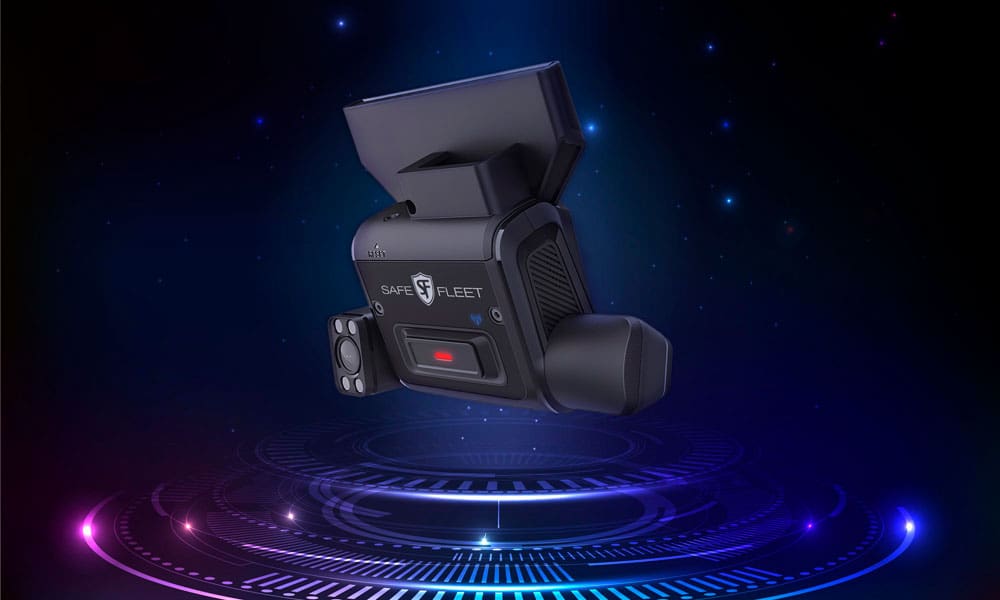
The system uses a dual-camera approach to provide total context:
- The inward-facing camera shows WHAT a driver is doing (phone use, drowsiness, or distraction).
- The road-facing camera shows WHY it’s happening (a sudden cut-off by another vehicle or a hidden stop sign).
This pairing turns raw data into meaningful coaching. Instead of guessing why a driver slammed on the brakes, managers can see the full story in seconds.
4. Automation is the Antidote to “Video Fatigue”
Managing 200 buses requires keeping track of who is driving what, when, and where — but historically, teams had to rely on fragmented logs and guesswork to piece that information together.
Facial recognition changed this overnight. Duet AI automatically identifies drivers, tags routes, and scores risky behavior in real time. Supervisors now receive prioritized, actionable insights. This level of automation provides immediate administrative relief, allowing managers to focus on proactive safety rather than hours of “dead” video footage.
5. Use Pilot Data to Build Your Business Case
Richland’s driver coaching journey started with a different system that was ultimately rejected because it was too expensive and a poor fit for their specific needs.
But that “failed” trial was an important step. It provided a glimpse into safety issues they couldn’t unsee. It gave the district the justification they needed to find a more scalable, effective solution in Safe Fleet.
The takeaway: A pilot serves a higher purpose than simply testing hardware; it provides the justification required to make a permanent, high-stakes decision.
Rethinking What “Safety” Means
Richland’s pilot shows where the industry is headed: away from reactive reviews and toward proactive prevention. When 128 lives are at stake each year, the question shifts from “Should we adopt AI?” to: “If we can prevent a crash before it happens, how could we justify not doing it?”
To learn more about how the Duet AI Driver Behavior Monitoring System can protect your fleet, contact us or call 1.877.630.7366.
Ready to see the data behind the transformation?
Share This Story, Choose Your Platform!
Subscribe to our blog
RECENT BLOG ARTICLES
Inside the Cab: 5 Lessons One School District Learned From Their AI Bus Pilot
Every morning in America, more than 25 million students ride to school on a fleet that has no room [...]

Celebrating Jim Haigh — 43 Years of Leadership, Mentorship, and Legacy
At the end of last year, Safe Fleet bid farewell to one of its most enduring leaders. After 43 [...]
Behind the Badge: Chapter 3 – Building the Case
This is the third in a three-part series exploring how law enforcement technology helps protect truth, reinforces trust, and [...]
Behind the Badge: Chapter 2 – Suspect Encounter
This is the second in a three-part series exploring how law enforcement technology helps protect truth, reinforces trust, and [...]
Behind the Badge: Chapter 1 – A Routine Patrol Turns Critical
This is the first in a three-part series exploring how law enforcement technology helps protect truth, reinforce trust, and support [...]